Orwell’s grave
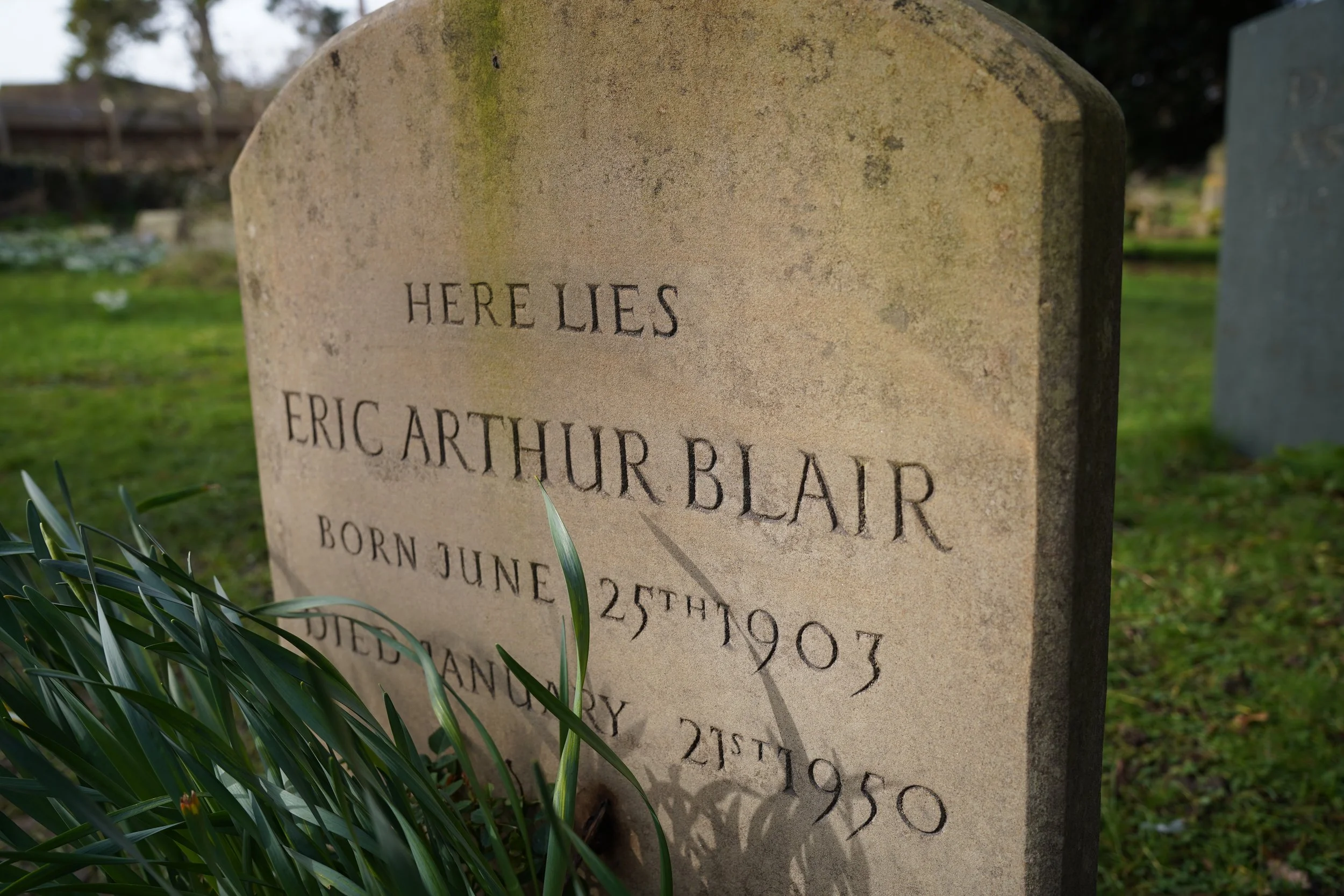
The headstone of Eric Arthur Blair (George Orwell)
Tucked away at the back of the graveyard that surrounds the rather unassuming church of All Saints in the village of Sutton Courtenay lies the resting place of Eric Arthur Blair. It’s one of those quaint village graveyards with imposing yew trees that cast a long shadow across the mosaic of regimented headstones.
Visitors could easily miss the literary giant’s headstone on a cursory visit to this Oxfordshire village; for a start, his pseudonymous pen-name, George Orwell, is absent. It adds mystery to the author whose life was shrouded in intrigue and ambiguity.
In the summer of 2025, I went through my ‘Orwell Phase’. For years, I had known about his work, but my understanding relied solely on the nuggets of quotations popularised online or a primitive GCSE reading of Animal Farm. But by far the most significant text, I think, is the essay titled ‘The Lion and the Unicorn: Socialism and the English Genius’, which Orwell penned while the Luftwaffe were bombing London in 1940.
Skip forward 86 years and crouched aside his headstone, I realised just how relevant (and resonant) Orwell’s words were with an impact far beyond the grave.
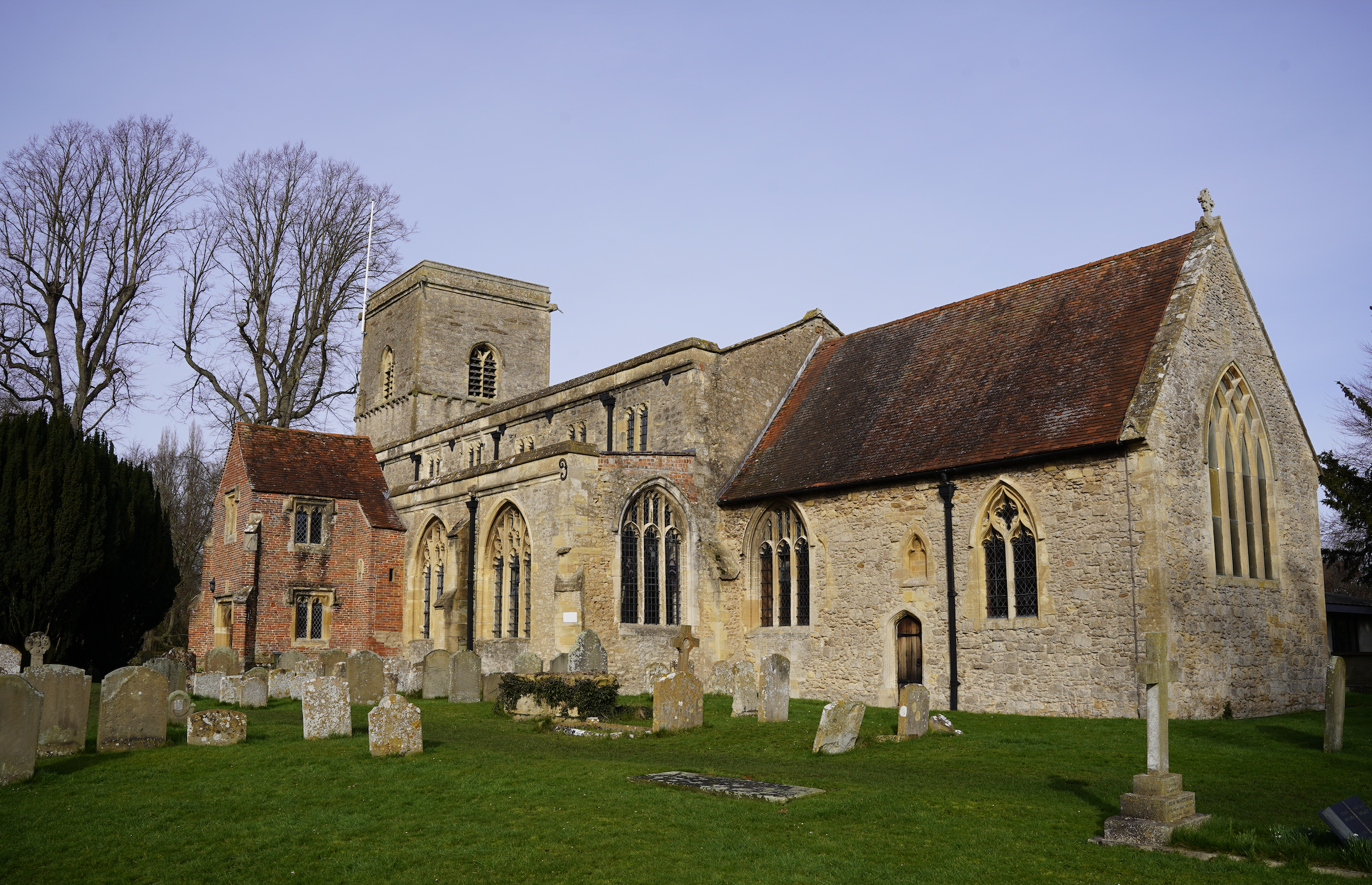
All Saints Church, Sutton Courtenay